



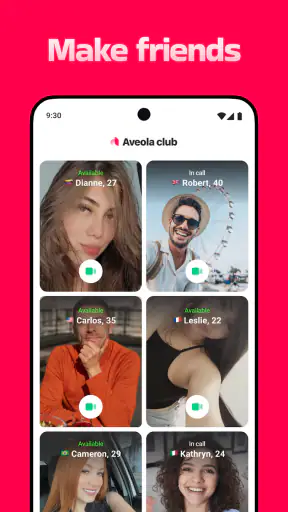
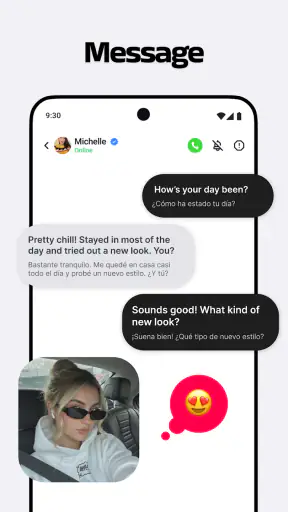
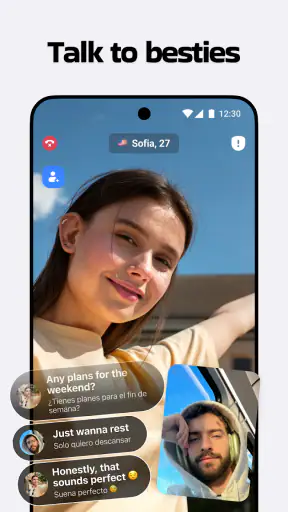
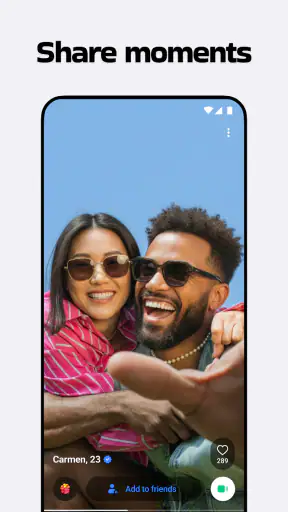

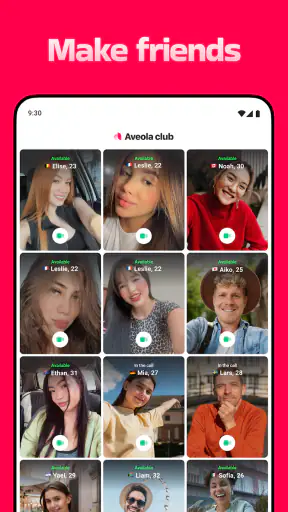

I approached Aveola: Live Video Chat as someone looking for a quick, more personal way to meet people online rather than another feed to scroll. It is a free lifestyle app from Pepitama Ltd built around live one-to-one video conversations. That basic idea is easy to understand, but the experience depends heavily on how comfortable you are with speaking to someone new, managing your attention, and making sensible choices about privacy.
My first impression was that Aveola is aimed at immediate interaction. It is not the kind of app I would open mainly to read long profiles or spend an hour arranging a perfect introduction. The appeal is the possibility of moving from browsing to a live conversation without much ceremony. For a first-time user, that can feel refreshing, although it also means the app asks you to make social decisions quickly.
The app is rated for mature users aged seventeen and over, so I would not treat it as a casual children’s social app. That matters because live video brings a different level of responsibility from text-only messaging. I would install it only if I were ready to leave a conversation immediately when it became uncomfortable, and I would avoid sharing identifying details until trust had been earned.
What to expect before you start
Aveola works best when you want a direct human exchange rather than a polished social profile. I can imagine using it after moving to a new city, during a quiet evening when I wanted company, or when I felt curious about meeting people outside my usual circle. It may also suit someone who finds endless text introductions tiring and prefers to understand a person through voice, expressions, and natural pauses.
The trade-off is that live video removes some of the protection offered by slower communication. With a conventional messaging app, I can think about a reply, check a profile, or simply leave a message unanswered. A live conversation creates pressure to react in the moment. That immediacy is the main attraction here, but it is also the reason I would recommend approaching the app with clear boundaries.
In everyday use, I would think of Aveola as a short-session app. I would open it with a simple goal, such as having one pleasant conversation, instead of expecting every interaction to become a friendship. That mindset makes the experience less disappointing. A brief, respectful exchange can still be a successful session, even if there is no lasting connection afterward.
The app has passed the one-million-install mark and holds an average rating of 4.2 from roughly nine thousand ratings, with more than eight hundred written reviews. Those figures suggest that it has attracted a substantial audience, but they should not be read as a promise that every conversation will suit you. Live social apps are naturally variable: the quality of a session depends on timing, personal compatibility, and how other people behave.
It is also worth understanding the cost model before becoming invested. Aveola is free to install, while optional in-app purchases range from ninety-nine cents to $114.99 per item. I would not spend anything during my first sessions. I would first learn what the free experience feels like, understand what any paid item does, and decide whether it solves a real problem for me rather than buying because a conversation feels awkward or rushed.
Installing and preparing for the first conversation
The current version is 2.0.7 and supports devices running Android 8.0 or later. Before installing, I would check that the phone is updated enough and that the camera and microphone work properly in another app. This small test avoids blaming Aveola for a hardware or system issue when the real problem is a blocked microphone, a damaged headset, or an unreliable connection.
I would also choose my surroundings carefully. A quiet room with a neutral background is more useful than a dramatic setup. Good light facing me is preferable to a bright window behind me, and placing the phone at eye level makes the conversation feel less awkward. These are simple adjustments, but they make a noticeable difference when a first meeting is already unfamiliar.
During setup, I would read each prompt rather than tapping through automatically. In a live video service, the important question is not only how quickly I can begin, but also what information I am making visible and what controls I have during a conversation. If the app presents choices about identity, visibility, notifications, or purchases, I would make them deliberately instead of accepting every default.
My practical preparation would be to decide on three personal rules before opening the first session. I would not share my full name, home address, workplace, private contact details, or financial information. I would end a call if someone pressured me to reveal them. I would also avoid moving a conversation to another service immediately just because the other person sounded friendly. A good interaction can survive a slower pace.
That approach is especially important because the mature age label does not mean every interaction will be mature in tone. It simply tells me that the app is not intended for younger children. I would still use the app as an adult social environment that requires judgment, not as a guaranteed safe space.
How I would reach a first meaningful success
For a new user, the first useful goal should be modest: complete one comfortable conversation. I would not measure success by how many people I meet or how long I stay online. I would begin when I had enough time to talk without rushing, make sure my face was visible, and keep one hand free so I could end the session without fumbling with the phone.
Once connected, I would open with something easy and neutral. Asking where someone is spending their day, what brought them to the app, or what kind of conversation they enjoy gives the other person room to answer without forcing an overly personal topic. I would avoid treating the first call like an interview. A relaxed exchange is more likely when both people can contribute naturally.
One useful technique is to set a small internal time limit for the first few calls. I might decide to stay for several minutes if the conversation is respectful, then leave politely if it is not a fit. This prevents the common mistake of remaining in an uncomfortable session simply because I feel rude ending it. In a live app, leaving is not a failure; it is a normal part of choosing who deserves my attention.
I would also pay attention to how quickly the other person respects boundaries. If I say that I prefer not to discuss personal details and they accept that without argument, that is a positive sign. If they repeatedly push, become insulting, or try to create urgency, I would end the conversation rather than attempting to repair it.
A realistic use case would be a person who has just started working remotely and wants a short social break after finishing work. Instead of opening a general social network and losing an hour to unrelated posts, they could use Aveola with the intention of having one live exchange. If the first call is uncomfortable, they can leave; if it is pleasant, they have achieved the evening’s goal without needing to turn it into a major relationship.
That short-session approach is one of my strongest recommendations. It keeps the app from taking over the day and makes it easier to judge the service on the quality of individual interactions. It also helps a first-time user avoid spending money impulsively while still learning whether live video suits their personality.
Where new users can become confused
The biggest source of confusion is likely to be the difference between an app that is free to install and an experience that may include optional purchases. I would not assume that every visible action is included without cost. Before confirming a purchase, I would look carefully at the item description and the final amount. I would also avoid storing payment details casually if I am only experimenting.
Another common misunderstanding is expecting a live video app to behave like a conventional matching service. Aveola’s central value is immediacy, so I would not judge it by the same standards I use for a detailed dating profile, a group community, or a private messaging tool. If I want careful compatibility checks, extensive written conversation, or a permanent record of contacts, a slower alternative may suit me better.
Connection quality can also affect first impressions. A frozen image, delayed audio, or a poor camera angle may make a person seem distracted when the real issue is the device or network. I would check my own setup before blaming the other participant. If the problem continues, I would leave and try again later rather than struggling through a conversation that neither person can enjoy.
Privacy is another area where expectations need to be realistic. Video reveals more than text: surroundings, facial expressions, voice, and sometimes accidental background details. I would remove visible documents, work badges, mail, or anything showing where I live before starting. I would also use headphones when appropriate, especially if other people are nearby and I do not want a private conversation overheard.
Some users may wonder whether they should keep talking when the conversation is merely dull. I would not. A respectful but uninteresting call has still provided useful information: the match was not right. I would end with a simple goodbye and move on. Staying because I feel obligated can make the app feel more stressful than it needs to be.
On the other hand, I would not dismiss every quiet start. Video calls often need a moment to settle. If the other person is polite and responsive, I would offer one or two easy questions before deciding. The important distinction is between normal awkwardness and behavior that makes me feel pressured or unsafe.
Using the app more thoughtfully over time
After the first successful session, I would create a repeatable routine rather than opening Aveola whenever I felt bored. For example, I might use it during a defined break, keep the phone charged, and stop after a small number of conversations. This gives the app a place in my day without allowing constant notifications or spontaneous calls to dictate my attention.
I would also keep my expectations flexible. A live one-to-one conversation can be valuable even when it does not lead to a continuing connection. Sometimes the benefit is simply practicing conversation, hearing a different perspective, or breaking a lonely routine. If I expect every interaction to become a close friendship, the app will probably disappoint me.
For people who are shy, I would suggest preparing a few safe subjects in advance. Travel, hobbies, food, films, books, local places, and everyday routines are easier starting points than personal history. I would not write a rigid script, but having a few options prevents the blank silence that can make a new user quit too early.
For people who are highly social, the challenge may be the opposite: sharing too much too soon. A friendly conversation can create a false sense of closeness, particularly when it happens face to face. I would keep the first few interactions inside the app until the person has shown consistent respect. Warmth is good; rushing trust is not.
Parents and guardians should pay attention to the mature age classification. I would not install this for a child or assume that supervision turns it into a child-friendly service. The live format requires age-appropriate judgment, and the app should be considered only by users who understand how to protect personal information and leave uncomfortable situations.
Compared with ordinary social networks, Aveola is more focused and immediate: there is less distance between deciding to meet someone and actually speaking with them. Compared with text messaging, it can feel more human but also more demanding. Compared with group video platforms, the one-to-one format may be less overwhelming for someone who dislikes speaking in front of several people, though it can make an uncomfortable interaction feel more intense.
Those comparisons also show who should skip it. If I wanted a quiet, asynchronous way to communicate, I would choose messaging. If I wanted structured communities around a shared hobby, I would look for a dedicated forum or group service. If I disliked appearing on camera or preferred complete control over when I respond, Aveola would probably feel like work rather than entertainment.
My recommendation after weighing the trade-offs
Aveola is most convincing when I use it for what it is: a direct way to try live one-to-one conversations with new people. The free entry makes experimenting straightforward, and the app’s lifestyle positioning gives it a broad use case beyond a single type of relationship. I like the fact that a meaningful result can be small—a pleasant conversation, a new perspective, or simply a more social evening.
Still, I would not recommend entering without a plan. The mature rating, live format, and optional purchases all point to the same conclusion: the user needs to stay in control. I would protect my identity, avoid rushed spending, test the free experience first, and leave any call that crosses my boundaries.
Pepitama Ltd has built Aveola around immediacy, and that is both its clearest strength and its main limitation. It can help a hesitant user move beyond silent scrolling, but it cannot guarantee compatibility, good manners, or a memorable conversation every time. The app gives me the opportunity to connect; I still have to choose wisely, communicate clearly, and decide when enough is enough.
With version 2.0.7 available for Android 8.0 and later, I would recommend trying it during a calm, private session rather than downloading it in the middle of a busy day. Give yourself time to understand the interface, complete one low-pressure conversation, and review how comfortable the experience feels. If you enjoy spontaneous face-to-face contact, Aveola is worth exploring as a focused social option. If you prefer slower, more predictable communication, another kind of app will likely serve you better.


